
Assassin snails are famous for killing and devouring other snails. Usually, when they are introduced to a tank, there’s a pest snail problem that needs to be taken care of. Either that or you simply prefer to keep them as pets since they don’t overpopulate. However, when the pest snails are killed off, the dilemma of what to feed the assassins comes into play, which is the reason for this discussion.
Assassin snails eat other snails and small invertebrates. They are carnivorous opportunists and skillful hunters who will happily feast on prey or decay. Assassin snails are also known to enjoy fish food and, rather rarely, algae, depending on what resources they have available.
If you’re wondering what to feed your assassin snails, you’ve come to the right article for the job. We’ll be discussing how to keep your pets well-fed using the diet that’s meant for them.

8 Nutritious Food Items To Feed Assassin Snails
Feeding assassin snails is pretty straightforward. You don’t need blanched vegetables or balanced animal-based and plant-based food to keep them healthy. All you require is a protein source, preferably a live one, and you’re good to go.
1. Snails
Feeder prey like mystery, ramshorn, and nerite snails are easily the assassins’ favorite food in the wild. They enjoy hunting, following slime trails, and eating them to the fullest. Free-roaming assassin snails primarily survive on other aquatic snails for their daily nutrients. Whether the food is alive or dead, an assassin snail will not pass on enjoying the delicious chow. Feeder snails are highly proteinous and filling, and are able to provide the significant nutrients assassins need.
2. Slugs
Assassin snails are known to actively hunt their prey, which could be invertebrates like slugs and anything small enough for them to kill without obstruction. However, they rarely hunt down slugs as some of the species produce unpleasant slime. They also secrete way too much of this slime and are generally bigger than necessary for assassin snails to kill. Instead of adult slugs, they mostly settle for hatchlings that produce less slime and are rather “bite-sized” for the purpose.
3. Worms
Blood worms, aquatic worms, and planaria flatworms also make it to the assassin snail’s menu. They provide the necessary nutrients required like protein and iron. Note that some assassin snails prefer worms to feeder snails and others vice versa, so your hungry predators may ignore the worms when they’re fed a few of them. However, they are sustainable and will surely keep them healthy and hearty.
4. Shrimp
Assassin snails enjoy eating shrimp whether dead or alive and can be target-fed unshelled shrimp as an alternative to live snails. Surprisingly, assassin snails also hunt live shrimp despite the shrimp being faster than them. The chances of eating one may be low, but it doesn’t deter the killer snails from attempting and being successful.
Unfortunate reviews from owners of assassin snails placed in the same tank as live shrimp describe just how skillful these snails are at hunting, as they evidently reduced the population of the said shrimp. So, if you’re hoping your shrimp are too fast for assassins, perhaps you should reconsider your choices.
5. Fish pallets
In addition to the proteinous list, assassin snails also enjoy fish food now and then. All you have to do is throw in a few into the tank and put in extra rounds depending on how much the snails can eat. The killer snails don’t overfeed, so you can feed them as much as they’re willing to eat. As long as you don’t let the leftovers sit in the water for too long, you’re good to go.
6. Cuttlefish bone
Cuttlefish bone is one of the primary sources of calcium that your snails require to grow healthy shells. Without it, they will suffer from shell rot or collapse which inevitably shortens their lifespan.
Other options are calcium powders or high-calcium veggies like broccoli, but aquatic snails in general are particular about powdery texture and sometimes do not benefit from powders. Meanwhile, assassin snails do not eat vegetables since they’re carnivorous. So, your best bet is cuttlefish bone and your snails should constantly have access to it.
7. Decaying Matter
Assassin snails are scavengers and opportunistic feeders. When there’s a carcass lying around, they will feast on it until there’s nothing left. In the wild, scavenging provides a good percentage of their daily meals and complements their predatory feeding. This allows them to be well-fed and healthy even when prey is scarce.
8. Algae
While algae is not a mandatory diet for the killer snails, they sometimes fill in the gaps by feeding on it. Usually, when resources are low and survival becomes primary, assassin snails are known to graze on spot algae. However, this diet is not satisfactory for their species and if it is prolonged, the snails will die from malnutrition.
A Visual Representation Of How Assassin Snails Feed
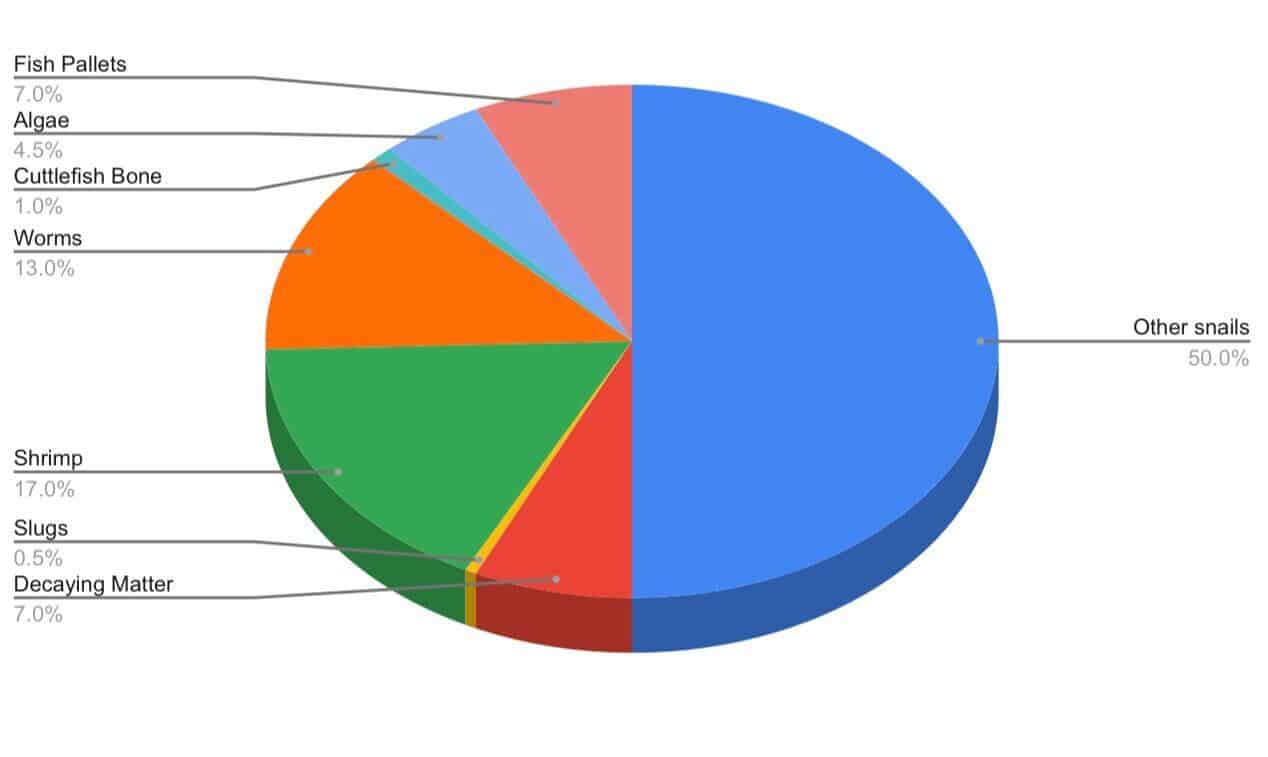
Compiling both pet and free-roaming assassin snails, we can deduce aggregates of what their diet is like most of the time. Feeder snails top the chart of what they eat or prefer to eat most of the time thanks to their predatory behavior. This is also because assassin snails are mostly introduced to tanks with invasive snail species.
Following suit are shrimp and worms which are mostly hand-fed, but the latter(worms) are the next favorite meals for free-roaming assassin snails.
Next to worms and shrimp, assassin snails enjoy decaying matter due to their scavenger characteristics. Then we have fish pallets, algae, and slugs that they wouldn’t mind living without. Last but definitely not least, cuttlefish bone is least sought for by the snails. It is highly crucial for their health and survival, and must be available to your assassin every day to ensure they grow healthy shells.
How Often Do Assassin Snails Eat?
Predatory snails generally eat less than omnivorous or herbivorous snails. So, they’d feed less compared to nerite or mystery snails. I recommend feeding your assassin snails their protein-based food at least once a day.
Some owners feed their snails every other day or twice a week, which isn’t necessarily wrong—different strokes for different folks! But if you want your snails to live to their fullest, you will incorporate their feeding habits in the wild. Since assassin snails are scavengers and predators, they switch to feeding on animal remains to keep themselves well-fed where prey is scarce. This just means that naturally they eat daily. The more comfortable and well-fed your snail is, the longer its lifespan.
The Healthy Food Proportions For Assassin Snails
Now that you have a plethora of options to feed your assassin snails, it’s crucial to understand how to feed them properly.
The most important aspect of feeding assassin snails is removing the leftovers to prevent them from decaying and throwing off the water parameters. Rotting flesh produces ammonia, which is toxic to the snails.
In the wild, there’s a whole lineup of bacteria and plants that break down the ammonia into non-harmful products like nitrates. Unfortunately, your aquarium is not advanced enough to handle this task seeing as the tank is incomparable to freshwater habitats in size and ecosystem. So, you must have a water testing kit on standby (view on Amazon) that will help you analyze the condition of your snails’ home at all times while keeping the tank in good shape.
Below are the food items and how to feed them to your assassin snails.
| Food Items | How To Feed |
|---|---|
| Snails (Prey) | Two baby snails/one mature feeder snail per one assassin snail, or once a day, feed the feeder snails in batches until the assassin snails are satisfied. |
| Slugs | Do not feed slugs to snails as some of them carry parasites. Assassin snails may eat them in the wild, but it’s not recommended to hand-feed slugs to them. |
| Worms | Two blood worms per assassin snail once a day. |
| Shrimp | Two average-sized unshelled shrimps per assassin snail once a day. |
| Fish Pallets | One pallet per assassin snail twice a day. (Note that you can feed more of the pallets depending on your snail’s appetite) |
| Cuttlefish Bone | Drop chunks of the bone into the tank and ensure it’s available at all times. |
| Decaying Matter | Do not put decaying matter into the tank to prevent ammonia buildup. Assassin snails will scavenge the matter themselves. |
| Algae | Algae is mostly present in the tank and your assassin snails will graze on them when they desire. |
How Do Assassin Snails Hunt Their Prey?
Assassin snails catch their prey by ambushing or pursuing. If you’ve ever found your snail curiously burying itself in the sand, it’s probably just camouflaging and waiting for prey. Even when there’s no target, they still do this as a natural characteristic. I assure you that your snail is not dying and there’s no need to panic.
The killer snails also have special receptors that allow them to trace slime and locate decaying carcasses underwater just like a highly sensitized nose.
Although the assassin snail wasn’t the model of this study, this research proved the tendency of predatory snails to track their prey by following slime trails and even proposed a more effective result using predatory snails to control invasive snail species such as apple snails.
The Dangers Of Malnutrition On Assassin Snails
Assassin snails need a protein-based diet to survive and nothing less. Predatory snails that are fed low-quality foods are affected in areas of their growth, quality of life, and lifespan
Stunted Growth
Assassin snails that suffer from malnutrition grow slowly and stunted. This in turn affects their ability to hunt for food and defend themselves from harm. From the lack of adequate feeding, they plunge further into malnutrition, and then lethargy before dying.
Shell Problems
Erosion, rotting, and collapse of the shell are all results of malnutrition in aquatic snails. This is dangerous because their shells need to be strong enough to withstand the water pressure in relation to their small sizes. Without the proper amount of calcium or protein, the snails will suffer from having feeble shells and a shortened lifespan as a result.
Infertility
Assassin snails have one of the most minimal rates of reproduction compared to other aquatic snails. Malnutrition only plunges the percentage further down the line, making reproduction almost unattainable. If you desire more assassin snails, ensure you’re feeding the ones you have correctly to enable them to mate and lay eggs properly.
Why Is My Assassin Snail Not Eating?
Lack of appetite is usually a direct result of poor habitat. These snails are simple creatures; they live to feed and multiply. So, if your pets are not eating well, they’re probably uncomfortable. Check your water parameters to see if it’s all under control. You need a testing kit to determine and compare the results. Then, use the table below to describe in relation to the values and locate the problem.
| Parameters | Ideal Range |
|---|---|
| Temperature | 70 – 80 (°F) |
| pH | 7.6 – 8.0 |
| Ammonia (NH3/NH4+) | 0 |
| Nitrite (NO2-) | 0 |
| Nitrate (NO3-) | 0 |
| Copper (Cu) | 0 |
| Water hardness | 150 – 300 ppm |
| Salinity | 0 |
Why Is My Assassin Snail Not Killing Pests Snails?
If your assassin snails are not assassinating as they should, they are probably getting too many resources. Habit grows over time and if you feed them excess pallets, blood worms, and shrimp, they won’t bother going after the main problem which is your pest snail infestation. Consider shortening the food you target-feed them and allow them to feed instinctively. Before you realize it, they’d begin chasing after the pest snails. This usually takes 3 to 4 months to complete, so the earlier they start, the better for you!
Will Assassin Snails Eat Bigger Snails?
Most snail owners believe that assassins don’t kill snails that are bigger than them in size, but the truth is that they will! Any sizable thing that has a shell is a common target for assassin snails. They have killed and eaten mystery snails that are thrice bugger by collectively attacking and feasting on the snails. As if being able to ambush their prey is not enough, they can also group hunt to take down larger prey.
